
If you just want the actions of how to achieve this then skip to “Optimize Your Store for ChatGPT” – but there is great context in this article to help.
ChatGPT has revolutionized how people discover products online. With its new shopping capabilities, ChatGPT can now display products directly in search results, complete with prices, descriptions, and reviews (as seen below). But how does ChatGPT decide which products to show? And more importantly, how can you optimize your store to appear in these valuable product recommendations?
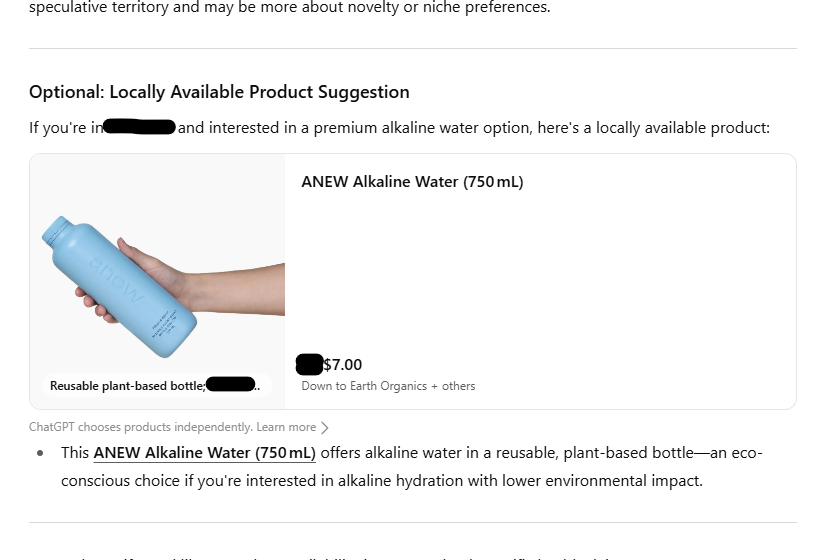
How ChatGPT Selects Products to Display
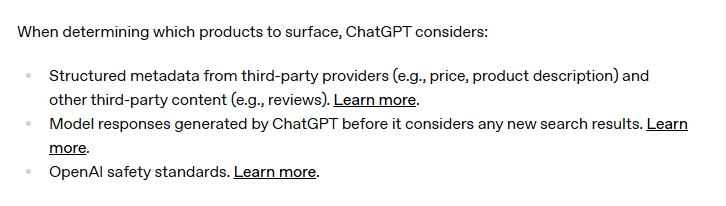
According to OpenAI’s official documentation on Improved Shopping Results from ChatGPT Search (image above is the key part), ChatGPT considers three key factors when determining which products to surface in search results:
1. Structured metadata from third-party providers – This includes essential product information like price, product descriptions, and customer reviews
2. Model responses generated by ChatGPT – The AI considers the context and relevance of your content when generating responses
3. OpenAI safety standards – Products must meet OpenAI’s safety and quality guidelines
The first factor – structured metadata – is where e-commerce store owners have the most control and opportunity to optimize.
The Power of Structured Metadata for AI Visibility
When ChatGPT analyzes your product pages, it looks for specific structured data that helps it understand what you’re selling. This isn’t just about having a product title and description visible on your page – it’s about implementing proper metadata that AI systems can easily parse and understand.
Essential structured metadata includes:
- Product information – Name, description, SKU, brand, category
- Pricing data – Current price, sale prices, currency
- Product descriptions – Detailed, keyword-rich descriptions that provide context
- Customer reviews and ratings – Aggregate ratings, review counts, and individual review content
- Availability status – In stock, out of stock, pre-order
- Images – High-quality product images with proper alt text
What is Metadata?
Metadata is like a “label” or “tag” that describes what something is, but isn’t visible to regular visitors.
Think of it like this:
Real-world example: When you buy a shirt, the clothing tag tells you the size, material, care instructions, and brand – but you don’t see that tag when someone looks at you wearing the shirt.
Website example: When you visit a product page, you see the product name, price, and description. But hidden in the website’s code are extra “labels” (metadata) that tell search engines and AI systems things like:
- “This is a product page”
- “The price is $29.99”
- “It has 4.5 stars from 127 reviews”
- “It’s in the ‘Electronics’ category”
Why it matters: Just like how store employees use clothing tags to organize inventory, search engines and AI systems like ChatGPT use metadata to understand and organize web content. The better your metadata, the easier it is for AI to understand what you’re selling and recommend it to the right people.
Simple analogy: If your website is a library book, metadata is like the card catalogue information – it helps librarians (AI systems) know what the book is about and where it belongs, even though library visitors don’t see those catalogue cards.
Building Context Around Your Products
The second factor ChatGPT considers – model responses – relates to how well your content provides context around your products. This goes beyond basic product data to include:
Content that builds product context:
- Comprehensive product descriptions with use cases
- Frequently Asked Questions (FAQs) about your products
- Product specifications and technical details
- Brand information and company background
- Related product recommendations
- Category and collection organization
When your product pages contain rich, contextual information, ChatGPT is better able to understand when and how to recommend your products to users.
How SEO for AI Plugins Optimize Your Store for ChatGPT
Manually implementing all the necessary structured data and metadata can be complex and time-consuming. That’s where specialized optimization tools become invaluable.
The SEO for AI WordPress plugin and SEO for AI Shopify app are specifically designed to optimize your store for AI engines like ChatGPT. These tools automatically implement:
Comprehensive Structured Data
- Product schema markup with complete product information
- Review schema integration (Shopify only) from popular review apps (Judge.me, and more)
- Organization and website schemas for brand context
- Breadcrumb and navigation schemas for site structure
AI-Friendly Metadata
- AI-specific meta tags that help AI systems understand your content
- Enhanced product descriptions formatted for AI comprehension
- Review and rating metadata from your existing review systems
- Category and tag optimization for better product classification
Automatic Integration
The plugins work seamlessly with your existing setup:
- WordPress users get automatic integration with WooCommerce and popular plugins
- Shopify users get instant compatibility with major review apps and themes
- No coding required – everything works automatically once installed
- Regular updates to stay current with AI engine requirements
Take Action: Optimize Your Store for ChatGPT
Ready to get your products featured in ChatGPT search results? Here’s what you should do:
1. Install SEO for AI Optimization
Start by installing the appropriate SEO for AI plugin for your platform that will automatically add all of the appropriate Metadata to your website:
- WordPress stores: Get the SEO for AI WordPress plugin
- Shopify stores: Install the SEO for AI Shopify app
These tools will automatically implement the structured metadata, context and AI-friendly optimization your store needs.
2. Register for ChatGPT Product Discovery
OpenAI has created a specific program for e-commerce businesses to get their products included in ChatGPT search results. Submit your store information through their official form:
Apply for ChatGPT Product Discovery
This registration helps ensure ChatGPT’s systems can properly discover and index your products.
3. Enhance Your Product Content
While the technical optimization handles the structured data, don’t forget to:
- Write detailed, helpful product descriptions (as you would for SEO, but from a customers perspective so you have their context)
- Add comprehensive FAQs for your products (either on the page or as metadata or both)
- Ensure your product images are high-quality and properly tagged
- Encourage and respond to customer reviews (and show them either on the page or as metadata or both)
- Keep your inventory and pricing information up to date and have that embedded in the page in metadata
The Future of AI-Powered Shopping
ChatGPT’s shopping capabilities represent just the beginning of AI-powered product discovery. As more AI engines develop shopping features, having proper structured metadata and AI-friendly optimization will become increasingly important for e-commerce success.
By implementing comprehensive structured data that includes product information, prices, descriptions, and customer reviews, you’re not just optimizing for ChatGPT – you’re future-proofing your store for the next generation of AI-powered shopping experiences.
The stores that take action now to optimize for AI engines will have a significant advantage as AI-powered shopping becomes mainstream. Don’t wait – start optimizing your store today and position your products to be discovered by millions of ChatGPT users searching for products like yours.
Ready to optimize your store for ChatGPT and other AI engines? Install the SEO for AI plugin for your platform and register for ChatGPT’s product discovery program to start getting your products featured in AI search results.